Introduction
Children learn best when they are actively involved in playful and meaningful activities. Their brains develop rapidly during the early years, and the experiences they enjoy every day can shape memory, focus, creativity, communication, and emotional growth. Parents often search for easy ways to help children become smarter and more confident without creating pressure or stress.
Simple brain development games for kids are among the most effective methods for encouraging healthy mental growth. These activities do not require expensive toys, advanced technology, or complicated planning. Everyday games played at home, outdoors, or in classrooms can strengthen thinking skills while making children feel happy, curious, and engaged in learning.
Brain-based activities help children improve concentration, understand patterns, solve problems, and remember information more effectively. Many children naturally enjoy games because they combine fun with challenge. This creates a powerful learning environment where kids stay interested for longer periods and become more willing to explore new ideas and skills.
Parents and teachers are increasingly reducing screen time and introducing hands-on learning experiences. Creative activities such as memory games, storytelling, puzzles, and movement-based challenges encourage children to use different areas of the brain at the same time. As a result, these experiences support emotional intelligence, academic development, and social confidence in a natural and enjoyable way.
Why Brain Development Games Matter for Kids
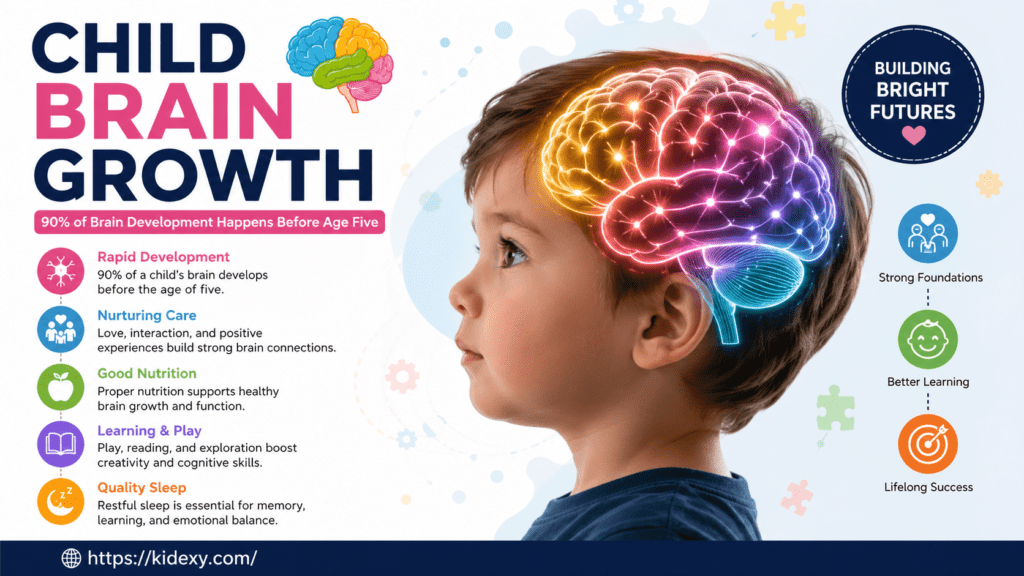
Childhood is the most important stage for brain development because the brain forms millions of connections during these years. Every conversation, movement, sound, and activity contributes to the development of thinking and learning abilities. Games that stimulate the mind encourage stronger neural connections, helping children process information more efficiently and confidently.
When children play educational games, they learn how to focus on tasks, follow instructions, remember details, and solve problems independently. These skills are essential for school success and daily life. Simple activities can improve patience, listening abilities, and emotional control while also building curiosity and imagination in young learners.
Simple brain development games for kids are especially valuable because they combine entertainment with learning. Children rarely feel forced during these activities because they naturally enjoy play. This relaxed environment allows the brain to absorb information more effectively, making learning more memorable and enjoyable over time.
Research and observation show that children who regularly engage in stimulating play often develop stronger communication skills and higher confidence levels. Interactive games encourage teamwork, creativity, and critical thinking. Even basic activities like sorting colors or remembering objects can support long-term intellectual growth in a meaningful and practical way.
Memory Games That Improve Learning Skills
Memory is one of the most important cognitive skills children need for academic and personal growth. Strong memory helps children remember lessons, instructions, names, and important daily information. Fun memory games train the brain to store and recall information quickly while keeping children interested and mentally active.
One effective activity is the tray memory game. Parents can place several household items on a tray and allow the child to study them for a short time. After covering the tray, the child tries to remember as many items as possible. This simple exercise strengthens concentration, visual memory, and observation skills in an entertaining way.
Matching card games are also excellent for brain development. Children turn over cards and try to find matching pairs while remembering the location of each image. These games improve attention span and mental organization. They also teach children patience and strategy because success depends on careful thinking rather than random guessing.
Story recall activities are another powerful way to build memory skills. Reading a short story and asking children questions afterward encourages active listening and understanding. Children learn to remember details, organize information, and express their thoughts clearly. These exercises support both cognitive growth and language development at the same time.
Focus and Attention Games for Better Concentration
Many children struggle with short attention spans because modern life is filled with distractions. Brain games that improve focus can help children stay attentive during schoolwork, conversations, and daily tasks. Attention-building activities train the brain to ignore distractions and remain engaged for longer periods of time.
The classic “I Spy” game is one of the easiest and most effective concentration activities for children. It encourages kids to observe their surroundings carefully and think critically about shapes, colors, and letters. Parents can increase difficulty levels by adding themes or categories, making the activity both educational and entertaining.
Mirror movement games are another excellent way to improve focus and body awareness. In this activity, one person performs actions while the child copies every movement carefully. Children must pay close attention to details and react quickly. This strengthens coordination, listening skills, and mental alertness in a fun and active setting.
Simple brain development games for kids that involve listening challenges can also improve attention span significantly. Asking children to identify sounds around them or follow multi-step instructions helps train auditory processing skills. These exercises support classroom learning because children become better at following directions and understanding spoken information.
Problem-Solving Games That Encourage Logical Thinking
Problem-solving is a valuable life skill that helps children make decisions, understand challenges, and think independently. Brain games focused on logic encourage children to analyze situations carefully instead of reacting impulsively. This improves reasoning abilities and strengthens confidence when facing new tasks or unfamiliar situations.
Puzzles are among the best activities for developing logical thinking in children. Jigsaw puzzles teach kids how to recognize patterns, shapes, and relationships between pieces. As children complete puzzles, they learn patience and persistence while strengthening spatial awareness and critical thinking abilities naturally through play.
Building activities using blocks or cups also encourage creative problem-solving. Children experiment with balance, structure, and design while learning through trial and error. These activities stimulate imagination and teach children how to adapt when things do not go as planned. Such experiences are important for intellectual and emotional development.
Maze games are another enjoyable way to improve logical reasoning. Children must think ahead, consider different paths, and make decisions carefully. These activities strengthen planning skills and concentration while also teaching children how to approach challenges calmly and strategically rather than becoming frustrated too quickly.
Language and Communication Brain Games
Language development is closely connected to overall brain growth because communication skills influence learning, relationships, and confidence. Brain games that focus on words, storytelling, and conversation help children expand vocabulary and express ideas more clearly. These activities also improve listening abilities and comprehension skills naturally.
Rhyming games are excellent for developing language awareness in young children. Kids enjoy finding words that sound similar, and this activity improves pronunciation, memory, and reading readiness. Rhyming also helps children recognize patterns in language, making it easier for them to learn spelling and phonics later.
Story-building activities encourage imagination while strengthening communication skills. Parents can begin a story with one sentence and allow children to continue adding details. This process improves creativity, sequencing abilities, and confidence in speaking. Children also learn how to organize thoughts and communicate ideas more effectively.
Simple brain development games for kids that involve word association can strengthen thinking speed and vocabulary growth. In these games, children quickly respond with related words based on a category or topic. Such activities challenge the brain while making language learning feel playful rather than academic or stressful.
Creative Activities That Stimulate Imagination
Creativity is an important part of brain development because it encourages flexible thinking and emotional expression. Children who engage in creative play often become better problem-solvers and communicators. Imaginative activities allow kids to explore ideas freely while developing confidence and independent thinking abilities.
Drawing challenges are excellent for encouraging creativity and observation skills. Asking children to draw animals, objects, or imaginary scenes helps improve focus and fine motor coordination. Art activities also allow children to express emotions in healthy ways while building patience and concentration through enjoyable creative experiences.
Pretend play is another powerful tool for brain development. Children naturally enjoy acting like doctors, teachers, chefs, or superheroes. During role-playing activities, kids practice communication, emotional understanding, and social interaction. They also strengthen memory and imagination because they create situations and solve pretend problems creatively.
Craft activities using paper, recycled materials, or household objects can also stimulate learning and innovation. Children experiment with shapes, textures, and designs while improving hand-eye coordination. Creative projects encourage persistence because children learn to complete tasks carefully and proudly display their finished work afterward.
Indoor Brain Development Games for Kids
Indoor activities are especially helpful during bad weather, busy schedules, or quiet family evenings. Parents do not need large spaces or expensive toys to create meaningful learning experiences at home. Many simple games can improve cognitive skills while keeping children entertained and mentally active indoors.
Color sorting activities are easy to prepare and highly educational for younger children. Kids can organize buttons, blocks, or paper pieces by color or shape. This activity improves observation skills, concentration, and pattern recognition. It also supports early math development because children learn classification and organization naturally through play.
Clapping rhythm games are another excellent indoor activity that supports memory and focus. Parents create simple clapping patterns, and children repeat them accurately. This strengthens listening abilities, timing, and concentration while adding movement and excitement to the learning process. Rhythm-based activities also improve coordination and auditory processing skills.
Treasure hunts inside the house can transform ordinary spaces into exciting learning environments. Parents hide objects and provide clues that encourage children to think critically and observe carefully. These games strengthen memory, reasoning, and problem-solving abilities while making children feel adventurous and motivated to participate actively.
Outdoor Brain Development Activities
Outdoor play supports healthy brain development because children experience movement, fresh air, and sensory stimulation. Physical activity improves blood flow to the brain, helping children stay alert and emotionally balanced. Outdoor games also encourage teamwork, confidence, and exploration in natural and exciting environments.
Obstacle courses are excellent for improving coordination and decision-making skills. Children jump, crawl, balance, and move through different challenges while following instructions carefully. These activities strengthen motor skills and concentration at the same time. Kids also develop resilience because they learn to keep trying until they succeed.
Nature scavenger hunts encourage observation and curiosity. Parents can ask children to find leaves, flowers, rocks, or specific colors outdoors. This activity sharpens attention skills and introduces children to the natural world. Exploring different environments also supports sensory development and encourages children to ask thoughtful questions about their surroundings.
Simple brain development games for kids played outdoors often improve social skills because children interact with friends and family members more actively. Team games teach communication, cooperation, and patience. Children learn how to solve conflicts, share responsibilities, and celebrate achievements together in healthy and positive ways.
Age-Based Brain Games for Different Children
Children learn differently depending on their age and stage of development. Choosing age-appropriate activities helps kids stay interested without becoming bored or frustrated. Games should match a child’s abilities while still providing enough challenge to encourage learning and growth.
Toddlers benefit from sensory activities that involve touching, sorting, and exploring simple objects. Color recognition games, stacking blocks, and shape matching exercises improve coordination and basic thinking skills. At this age, short and engaging activities work best because young children have naturally limited attention spans.
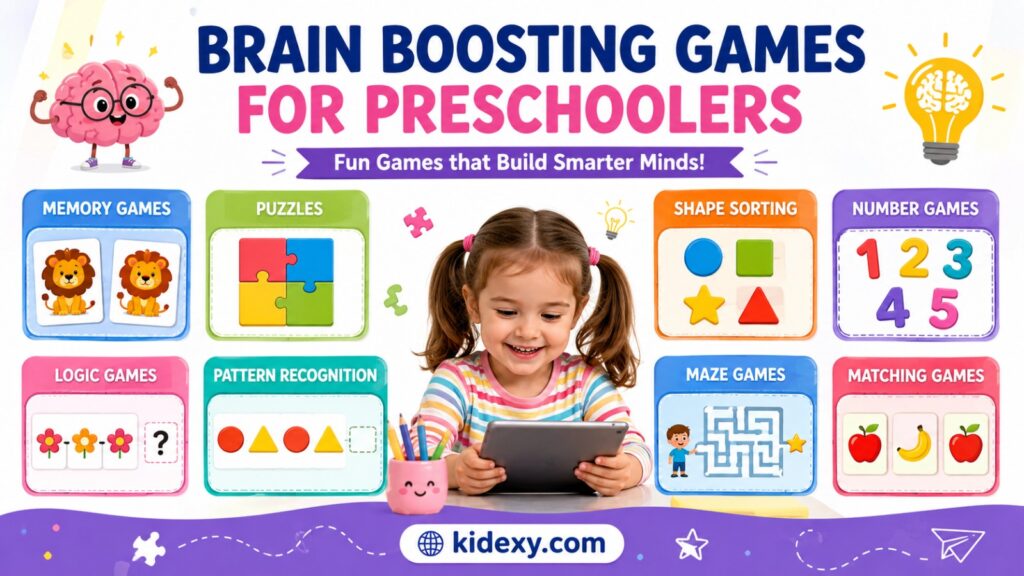
Preschool children enjoy games that involve imagination, memory, and simple problem-solving. Activities like storytelling, pattern-making, and matching games encourage cognitive growth while preparing children for school. Preschoolers also benefit from movement-based learning because physical activity supports both brain and body development.
Older children can handle more advanced puzzles, strategy games, and logical challenges. Activities that require planning and teamwork encourage independent thinking and confidence. School-age kids often enjoy educational competitions and creative building tasks that allow them to explore ideas while strengthening focus and reasoning abilities.
How Parents Can Support Brain Development Through Play
Parents play a major role in creating a positive learning environment for children. The way adults respond during activities can influence a child’s confidence, motivation, and willingness to explore new ideas. Encouragement and patience are often more valuable than expensive educational tools or technology.
Children learn best when they feel relaxed and emotionally secure. Parents should focus on enjoyment rather than perfection during brain games. Praising effort and creativity helps children develop a growth mindset, making them more willing to try challenging tasks and continue learning from mistakes.
Consistency is also important for cognitive development. Short daily activities are often more effective than occasional long sessions. Creating simple routines allows children to expect and enjoy learning moments regularly. Even fifteen minutes of focused play each day can have a meaningful impact on memory, focus, and communication skills.
Parents should also balance screen time with hands-on learning experiences. While some digital tools can be educational, physical activities encourage stronger social interaction and sensory development. Real-world play helps children build practical skills that are difficult to develop through screens alone.
Common Mistakes Parents Should Avoid
Many parents unintentionally turn educational activities into stressful experiences by placing too much pressure on children. Brain development games should feel enjoyable and encouraging rather than competitive or demanding. When children feel forced, they may lose interest and become resistant to learning activities over time.
Another common mistake is choosing games that are too difficult for a child’s age or ability level. Children become frustrated when activities feel impossible. Parents should gradually increase difficulty while allowing children to experience success and confidence along the way.
Excessive screen use can also reduce the benefits of active brain development games. Digital entertainment often provides instant stimulation, making it harder for children to practice patience and concentration. Hands-on activities encourage deeper thinking and stronger emotional connections compared to passive screen experiences.
Ignoring free play is another mistake many adults make. Children need opportunities to explore independently and create their own games. Free play encourages imagination, decision-making, and self-confidence because children learn how to solve problems without constant adult guidance.
Educational Benefits of Brain Development Games
Brain games support academic success by strengthening skills needed in reading, writing, mathematics, and classroom participation. Children who regularly practice memory and concentration activities often perform better during lessons because they can absorb and process information more efficiently.
Educational games also improve language development by encouraging children to communicate clearly and understand instructions carefully. Activities involving storytelling, rhyming, and listening challenges help children build vocabulary and comprehension skills naturally through enjoyable interaction and repeated practice.
Simple brain development games for kids can also improve emotional intelligence and social behavior. Children learn patience, empathy, and cooperation while interacting with others during games. These emotional skills are essential for building friendships, handling challenges, and developing healthy relationships in school and everyday life.
Another major benefit is increased confidence. Children who successfully complete puzzles, remember information, or solve challenges feel proud of their abilities. This positive self-image encourages them to participate more actively in learning experiences and approach difficult tasks with greater determination.
DIY Brain Games Using Household Items
Parents do not need expensive educational products to support healthy brain development. Many effective learning activities can be created using simple household materials already available at home. These low-cost games encourage creativity while making learning accessible for every family.
Bottle cap sorting activities are excellent for teaching colors, numbers, and patterns. Children can group caps by size or color while improving fine motor coordination and observation skills. This activity is easy to customize based on the child’s age and learning level.
Paper cup stacking challenges encourage coordination and problem-solving. Children experiment with balance and structure while trying to build stable towers. This activity develops patience, concentration, and creative thinking because children learn through experimentation and repeated attempts.
Homemade puzzles created from cardboard or recycled paper can also support cognitive growth effectively. Parents can draw shapes, letters, or pictures and cut them into pieces for children to assemble. These DIY activities encourage imagination while strengthening memory and logical thinking abilities.
Conclusion
Children develop important life skills when they engage in meaningful and enjoyable play experiences. Brain games encourage memory, concentration, creativity, communication, and emotional growth in natural ways. Parents and teachers can support learning without pressure by introducing simple activities that inspire curiosity and exploration every day.
Simple brain development games for kids provide long-term benefits that extend beyond academic performance. These activities help children become confident thinkers, effective communicators, and creative problem-solvers. Whether indoors or outdoors, structured or imaginative, educational games can shape healthy brain development in powerful and lasting ways.
The best part about these activities is their simplicity. Families do not need expensive tools or advanced technology to support a child’s mental growth. Everyday objects, conversations, movement, and creativity can become valuable learning opportunities that strengthen both cognitive abilities and family connections.
Creating a playful learning environment helps children associate education with excitement and confidence. By encouraging regular brain-based activities, parents can help children build stronger thinking skills while enjoying memorable experiences together throughout childhood.
FAQs
What are the best brain development games for kids?
The best brain development games include memory games, puzzles, storytelling activities, matching games, obstacle courses, and creative role-playing exercises. These activities strengthen concentration, logical thinking, communication, and creativity while keeping children entertained and engaged.
How do brain games help children learn faster?
Brain games improve memory, focus, and information processing abilities. Children learn how to pay attention, solve problems, and retain knowledge more effectively. These skills help them understand school lessons more quickly and perform better academically over time.
At what age should brain development activities begin?
Brain development activities can begin during infancy through sensory play, music, and interaction. As children grow older, parents can introduce more advanced games involving memory, language, and problem-solving to support different stages of development.
Are screen-free brain games better for children?
Screen-free activities often provide stronger benefits because they encourage physical movement, social interaction, and sensory experiences. Hands-on learning activities also help children improve communication and emotional skills while reducing excessive dependence on digital entertainment.
How long should children play brain development games daily?
Short daily sessions of fifteen to thirty minutes are usually effective for young children. Consistency matters more than duration because regular practice helps strengthen cognitive skills gradually without causing mental fatigue or boredom.
Can brain games improve a child’s memory and focus?
Yes, many educational games specifically target memory and concentration skills. Activities such as matching games, storytelling, puzzles, and listening exercises train the brain to store information and stay attentive for longer periods.
Which indoor activities improve concentration in kids?
Indoor activities like memory tray games, clapping patterns, puzzles, matching cards, and treasure hunts are excellent for improving concentration. These games encourage children to observe carefully and remain mentally engaged throughout the activity.
Are puzzles useful for child brain development?
Puzzles are highly beneficial because they improve logical thinking, patience, spatial awareness, and problem-solving abilities. Completing puzzles also builds confidence and teaches children how to approach challenges step by step.
How can parents create brain games at home?
Parents can use simple household items such as cups, bottle caps, cardboard, paper, and toys to create educational games. Activities like sorting, stacking, storytelling, and homemade puzzles are affordable and highly effective for brain development.
Do brain games improve school performance?
Brain games can improve academic performance by strengthening focus, memory, communication, and reasoning skills. Children who regularly engage in educational play often participate more actively in class and understand lessons more effectively.