Children learn best when they are curious, active, and emotionally engaged. Indoor activities for child brain growth are simple games, creative tasks, and learning experiences that help improve memory, thinking ability, focus, language, and problem-solving skills while children stay inside the home. These activities are especially useful during hot weather, rainy days, holidays, or screen-free family time.
Parents often believe brain development only happens in schools or through expensive educational tools. In reality, many powerful learning experiences happen through everyday play at home. A child’s brain grows rapidly during the early years, and the right indoor environment can support creativity, emotional intelligence, and cognitive development in a natural way. Fun and meaningful activities also strengthen family bonding while helping children build confidence and communication skills.
Why Brain Development Activities Matter for Children
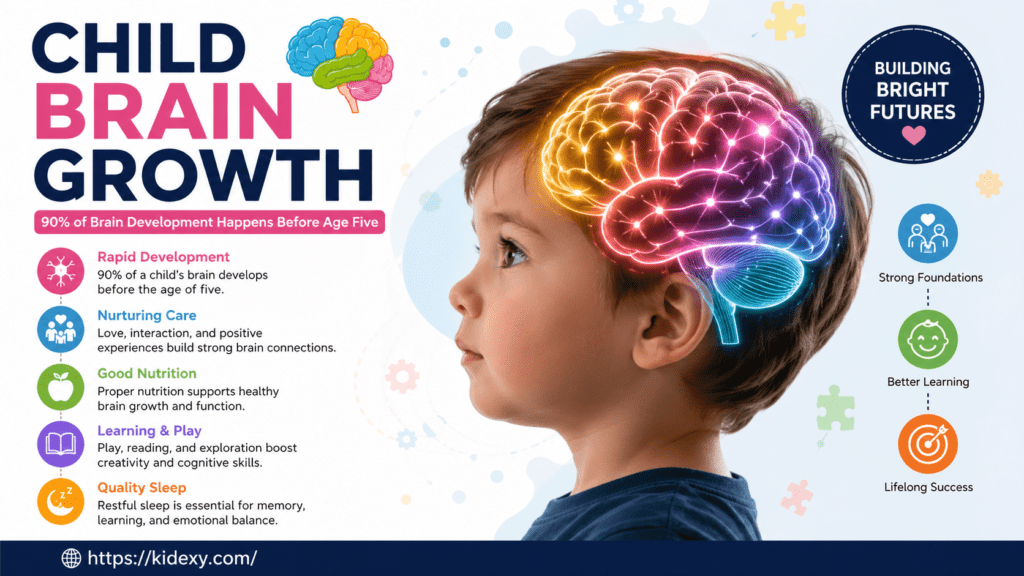
The human brain develops quickly during childhood. Every conversation, game, and creative task builds new neural connections. Indoor learning experiences provide children with opportunities to explore ideas, make decisions, and improve understanding through hands-on engagement. These moments shape emotional growth along with intellectual ability.
Children who participate in stimulating activities often develop stronger concentration and better social skills. They also become more confident in expressing thoughts and solving problems independently. Parents can support this development without creating pressure by choosing playful activities that match the child’s age and interests.
Brain-focused activities also help reduce excessive screen time. Many children spend hours using phones or watching television, which may limit active thinking and imagination. Interactive indoor experiences encourage movement, communication, and creativity, making learning more natural and enjoyable for growing minds.
Another important benefit is emotional balance. Children who engage in calm and structured activities at home usually feel more secure and relaxed. Creative tasks, puzzles, storytelling, and music can improve mood while reducing stress and frustration in young learners.
Creative Art Activities That Stimulate Thinking
Drawing and painting allow children to express emotions and ideas visually. These activities improve imagination, hand coordination, and attention to detail. When children choose colors, shapes, or designs, they practice decision-making and creative thinking in a relaxed environment that encourages self-expression.
Simple crafts using paper, glue, cardboard, or recycled materials also strengthen problem-solving skills. Children learn how to plan steps, follow instructions, and experiment with different ideas. Art activities can become even more educational when parents ask questions about the child’s work and encourage storytelling around their creations.
Clay modeling and play dough activities are also excellent for mental growth. Shaping objects with hands improves fine motor skills while supporting spatial awareness. Children naturally learn about balance, size, texture, and structure while creating animals, letters, or everyday objects from soft materials.
Parents should avoid focusing only on perfect results. The learning process matters more than the final artwork. Encouraging effort, creativity, and experimentation helps children feel confident and motivated to explore new ideas without fear of making mistakes.
Indoor Activities for Child Brain Growth Through Reading
Reading is one of the most effective ways to support language and cognitive development. Storybooks introduce children to new vocabulary, emotions, and situations. Listening to stories improves concentration and imagination while helping children understand relationships, actions, and consequences in different scenarios.
Interactive reading creates even stronger learning opportunities. Parents can pause during stories and ask simple questions about characters or events. This encourages children to think critically, predict outcomes, and explain their opinions. Such conversations improve communication and reasoning abilities naturally.
Picture books are especially helpful for younger children. Images stimulate observation and encourage children to describe what they see. Older children benefit from chapter books and educational stories that introduce science, history, or moral lessons in an engaging format.
Creating a daily reading routine also builds discipline and emotional comfort. A quiet reading session before bedtime can calm the mind while strengthening the parent-child relationship. Over time, children often develop a lifelong love for learning through books and storytelling.
Puzzle Games That Improve Problem-Solving Skills
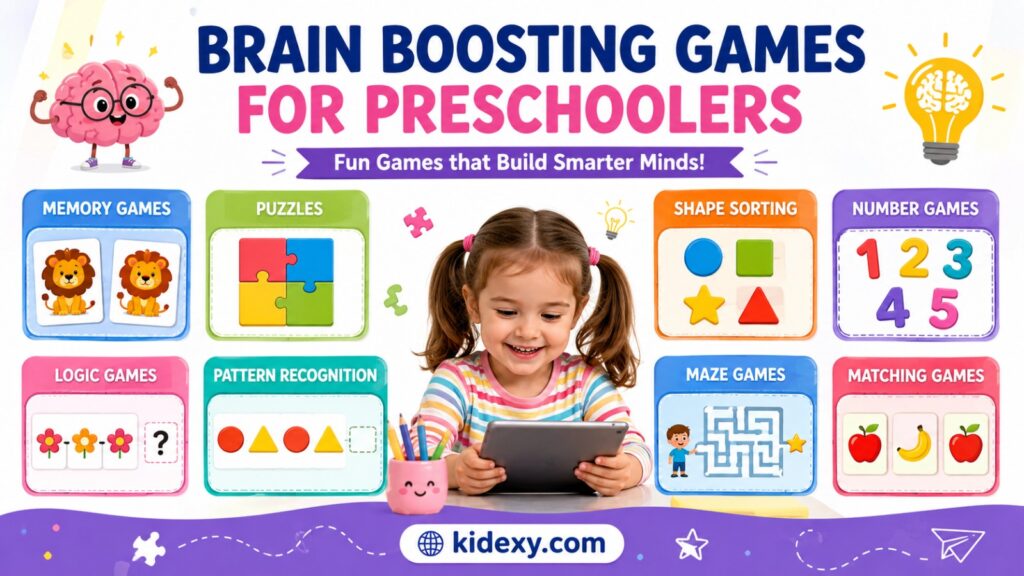
Puzzles challenge children to think carefully and recognize patterns. Whether using jigsaw puzzles, matching games, or shape sorters, children learn patience and logical reasoning. These activities strengthen memory and concentration because children must focus on details and analyze different possibilities.
Word puzzles and simple riddles are useful for language development. They encourage children to think creatively and improve vocabulary. Crossword games for older children can increase spelling accuracy while boosting general knowledge in a fun and interactive way.
Building puzzles with family members also teaches teamwork and communication. Children learn how to share ideas, listen to suggestions, and solve challenges together. Collaborative problem-solving improves social confidence while creating meaningful family experiences at home.
Parents should select puzzles based on the child’s age and ability level. Extremely difficult tasks may cause frustration, while overly simple games can reduce interest. Balanced challenges keep children motivated and mentally active without unnecessary pressure.
Memory Games That Strengthen Cognitive Skills
Memory games help children retain information and improve attention span. Card matching games are simple yet highly effective for developing concentration and visual recognition. Children learn to remember locations, compare images, and process information quickly during gameplay.
Repeating sequences, such as colors, sounds, or numbers, also improves working memory. These activities encourage children to focus carefully while training the brain to store and recall details more efficiently. Such exercises support learning abilities that later become useful in school environments.
Parents can create homemade memory challenges using household items. For example, placing objects on a tray and removing one item after observation encourages children to identify changes. This playful method improves observation skills while keeping learning enjoyable and interactive.
Music-based memory games are another excellent option. Singing rhymes, repeating lyrics, or remembering dance movements activates multiple areas of the brain. Combining rhythm with repetition makes information easier to retain and improves listening skills at the same time.
Building Activities That Encourage Logical Thinking
Construction toys and building blocks are excellent tools for brain development. Children learn about balance, design, and structure while creating towers, houses, or imaginary cities. These tasks improve spatial awareness and encourage experimentation through hands-on learning experiences.
Building projects also support patience and persistence. Children often need to rebuild structures after mistakes, which teaches resilience and adaptability. Instead of giving up, they gradually learn how to adjust ideas and improve results through practice and observation.
Parents can increase the educational value by introducing challenges. Asking children to build bridges, animals, or specific shapes encourages planning and strategic thinking. Such activities strengthen creativity while improving mathematical understanding in a playful and stress-free way.
Household items like cups, boxes, or plastic containers can also become creative building materials. Expensive toys are not necessary for meaningful learning experiences. What matters most is giving children freedom to explore, imagine, and experiment safely indoors.
Role-Playing Activities for Emotional Intelligence
Pretend play is an important part of childhood learning. When children act as doctors, teachers, shopkeepers, or chefs, they explore emotions, communication, and social behavior. Role-playing improves language skills because children practice conversations and express ideas creatively.
These activities also teach empathy. Children begin to understand different perspectives by imagining how others think or feel. Emotional intelligence develops naturally when children learn to cooperate, negotiate, and respond to imaginary situations with care and understanding.
Indoor role-playing can include simple costumes, toys, or household objects. A blanket can become a shop, while kitchen utensils may turn into restaurant tools. Such creative transformation encourages imagination and flexible thinking without requiring expensive resources.
Parents who participate in pretend games can guide positive behavior gently. Asking questions, introducing scenarios, or encouraging problem-solving helps children develop confidence and social awareness in a comfortable and enjoyable setting.
Music and Dance Activities for Brain Stimulation
Music activates several parts of the brain at once. Singing songs improves language patterns, listening ability, and memory retention. Children who regularly engage with music often develop better rhythm recognition and stronger verbal communication skills over time.
Dance activities combine physical movement with mental coordination. Following beats and remembering movements strengthen balance, focus, and body awareness. These experiences also release energy in healthy ways, helping children feel happier and more emotionally balanced indoors.
Simple homemade instruments can make musical play more exciting. Children enjoy creating sounds using containers, spoons, or small objects. Exploring rhythm and tempo encourages creativity while introducing basic scientific ideas about sound and vibration naturally.
Group singing and movement games also support social interaction. Children learn how to cooperate, take turns, and follow instructions while having fun. Music-based learning often feels effortless because children remain emotionally engaged throughout the activity.
Science Experiments That Inspire Curiosity
Simple indoor science experiments encourage children to ask questions and explore how things work. Activities such as mixing colors, observing plant growth, or creating baking soda reactions make learning exciting and memorable. Curiosity becomes stronger when children can see results directly.
Science-based activities improve observation and reasoning skills. Children learn how to compare outcomes, identify patterns, and make predictions. These experiences support analytical thinking while teaching that mistakes are part of the learning process rather than failures.
Parents do not need advanced equipment to introduce science concepts. Everyday household materials can create meaningful educational experiences. Water, paper, magnets, or kitchen ingredients often provide enough opportunities for safe and engaging exploration at home.
Encouraging children to explain what they observe is equally important. Discussion strengthens understanding and communication abilities. Asking simple questions about why something happened encourages deeper thinking and develops confidence in expressing ideas independently.
Indoor Activities for Child Brain Growth Using Everyday Tasks
Daily household routines can become valuable learning opportunities. Cooking with children teaches measurement, sequencing, and problem-solving. Following recipes improves listening skills and introduces basic mathematics while allowing children to explore textures, smells, and flavors creatively.
Sorting laundry by color or size also supports cognitive development. These activities strengthen categorization skills and attention to detail. Children learn responsibility while practicing observation and organization in a practical and engaging way.
Gardening indoors with small plants introduces responsibility and patience. Children observe changes over time and learn about nature through direct experience. Watering plants regularly teaches consistency while improving emotional connection with living things.
Even cleaning activities can become educational. Organizing toys, arranging books, or matching objects encourages logical thinking and discipline. When presented positively, everyday responsibilities help children develop independence and confidence in handling tasks successfully.
Challenges Parents Face During Indoor Learning
Many parents struggle to keep children engaged without relying heavily on screens. Children may quickly lose interest if activities feel repetitive or overly educational. Balancing entertainment with learning requires creativity, patience, and flexibility from caregivers at home.
Limited time is another common challenge. Busy schedules often make it difficult for parents to plan structured activities daily. However, short and meaningful sessions can still provide excellent learning opportunities. Consistency matters more than creating long and complicated routines.
Some parents also worry about expensive educational materials. Fortunately, effective indoor learning does not require costly products. Many beneficial activities can be created using simple household items, recycled materials, or free storytelling and imagination-based games.
Children with different personalities may respond differently to activities. Some enjoy movement and music, while others prefer reading or puzzles. Understanding individual interests helps parents choose experiences that keep children motivated and emotionally connected to learning.
Tips for Creating a Brain-Boosting Indoor Environment
A calm and organized space helps children focus better during activities. Too much noise or clutter can reduce concentration and create distraction. Even a small corner with books, art supplies, or puzzles can become a positive learning environment inside the home.
Rotating activities regularly keeps children interested and mentally active. Instead of offering too many choices at once, parents can introduce different games and tasks throughout the week. Variety encourages curiosity while preventing boredom from repetitive routines.
Positive encouragement is also important for brain development. Praising effort rather than perfection helps children build confidence and resilience. When children feel safe to make mistakes, they become more willing to explore ideas and solve challenges independently.
Parents should also participate whenever possible. Shared activities strengthen emotional bonds and make learning more meaningful. Children often feel more motivated when adults show genuine interest, excitement, and encouragement during indoor educational experiences.
The Long-Term Benefits of Brain Development Activities
Children who regularly engage in mentally stimulating activities often perform better academically later in life. They develop stronger memory, communication, and reasoning abilities that support success in school and everyday problem-solving situations.
Indoor learning experiences also contribute to emotional maturity. Children become more patient, creative, and adaptable through consistent engagement with puzzles, storytelling, music, and imaginative play. These qualities remain valuable throughout adolescence and adulthood.
Another long-term benefit is improved independence. Children who practice decision-making and critical thinking from an early age often feel more confident handling challenges. They become comfortable exploring solutions rather than depending entirely on adults for guidance.
Most importantly, meaningful indoor experiences create positive attitudes toward learning. When children associate education with fun, creativity, and emotional connection, they are more likely to remain curious and motivated throughout their lives.
Conclusion
Indoor learning experiences can play a major role in shaping a child’s intellectual and emotional development. From puzzles and storytelling to music and pretend play, simple activities at home help children improve memory, communication, creativity, and problem-solving abilities naturally. Indoor activities for child brain growth do not require expensive tools or complex planning to be effective.
Parents can create meaningful learning moments through everyday interactions, encouragement, and playful exploration. Consistent engagement matters more than perfection. By choosing enjoyable and stimulating activities, families can support healthy brain development while building stronger emotional connections and lifelong curiosity in children.
FAQs
What are the best indoor activities for child brain growth?
Some of the best activities include reading, puzzles, memory games, drawing, building blocks, music, storytelling, and science experiments. These activities improve creativity, focus, language, and problem-solving skills in children.
How do indoor activities help brain development?
Indoor activities stimulate different parts of the brain through thinking, movement, creativity, and communication. They strengthen memory, concentration, emotional intelligence, and learning ability in a fun and engaging way.
How much time should children spend on brain activities daily?
Children can benefit from 30 minutes to 2 hours of meaningful activities each day, depending on age and interest level. Short and consistent sessions are often more effective than long and tiring routines.
Can indoor games reduce screen addiction in children?
Yes, engaging indoor games can reduce excessive screen time by providing fun alternatives that keep children mentally active. Interactive family activities also improve emotional bonding and communication.
Are expensive educational toys necessary for brain growth?
No, many effective activities use simple household items, books, paper, or recycled materials. Creativity and interaction matter more than expensive toys or learning products.
Which activities improve memory in children?
Card matching games, storytelling, repeating sequences, music activities, and observation challenges are excellent for improving memory and concentration in young children.
Why is pretend play important for children?
Pretend play helps children develop imagination, communication skills, empathy, and emotional understanding. It also encourages social interaction and creative problem-solving abilities.